Lives & Legacy

Every person’s life contains an incredible story – one that deserves to be well told.
Lives & Legacy offers the opportunity for family and friends to share these stories in a unique and personal way.

Train will be ‘death’ of Pointe Fortune: Mayor

BRENDA O’FARRELLThe 1019 Report – Local Journalism Initiative “It’s going to be the death of my village.” That stark prediction came from the mayor of Pointe Fortune last week as she was asked to describe the impact the proposed multi-billion-dollar Alto high-speed train project to link Quebec City with Toronto will have on her little town — the second smallest municipality in the Vaudreuil-Soulanges region. That is, of course, if the federal Crown corporation runs its tracks through this western corner of the region. “I think it’s going to kill the town,” Mayor Sandra Lavoratore said in an interview with The 1019 Report following a public information meeting in Rigaud last Thursday to discuss the rail plan. Then, she immediately paused, acknowledging the full weight of her statement. “How are we going to survive this? How are we going to fight this?” Lavoratore added. She repeated the same questions at a large protest last Saturday in Rigaud organized by farmers demanding the train project be halted. She was the only mayor in the Vaudreuil-Soulanges region who attended the rally that attracted provincial politicians from the campaign trail and hundreds of farmers from rural communities across Quebec and eastern Ontario that could be affected by the Alto plan. “I’m here to support the farmers,” Lavoratore told the crowd at the protest. “But I’m here to save my town,” she added to applause from those gathered. Lavoratore said she first learned of the plan for the high-speed rail project possibly cutting across her little town last January through media reports. Although no precise route of the rail line has been announced, a map obtained from Alto provides a general trajectory of the first phase of the line — between Montreal, Laval and Ottawa — that indicates it could cut through a corner of Pointe Fortune and western Rigaud. Alto is expected to unveil a more precise, narrower outline of the route this fall. Until then, residents and farmers in the wider area wait and worry about being expropriated. Many of them have received notices from Alto asking permission to access their land to conduct soil tests. Lavoratore said she is joining forces with other municipalities in the MRC of Argenteuil, across the river from Pointe Fortune, that also fall within the proposed trajectory of the train route. She hopes that together they can hire a lawyer to help inform residents of their rights if and when it comes down to expropriation notices being sent out. But in the meantime, her town and its residents are caught in a waiting game. She has asked Alto for a list of properties that might be touched by the train’s route. The Crown corporation said that list is confidential. So last spring she turned to social media and went door to door to inquire if residents had received notices. Some had, others hadn’t. Although, she has been told that some notices were received as late as last week. “To have – they tell us – up to 30 trains a day that will pass through Pointe Fortune. What do you think will happen to our little village?” she asked, then paused again. But it is not just those whose land will be touched by the train who will be affected, she said. Attempting to calculate the full impact has to be done knowing the scale of the town itself. Pointe Fortune has only 641 residents and a tiny geographic footprint. The municipality is only a little over six kilometres long, stretching along the Ottawa River, and about 1.5 kilometres large, covering less than 9.5 square kilometres. “We’re all going to hear it. We’re all going to see it,” Lavoratore said of a train running along a fenced track at speeds of up to 300 kilometres an hour. “It’s not discreet.” “The impact is major.” And it is already being measured in a variety of ways. People are worried about their property values, she said. One resident even asked her if she should go ahead with plans to upgrade her windows. “I’ve seen people cry,” Lavoratore continued, referring to residents wondering what will happen. Will they be uprooted? Forced to move? There are only about 260 homes in Pointe Fortune. But there are plans for it to grow. A developer has submitted a project to build 150 townhouses on vacant land just east of the village centre, she said. That many new homes could increase the municipality’s population by 50 per cent, and give its tax base a huge boost. It’s a big deal for the municipality. But the developer has received a letter from Alto, Lavoratore said. The Crown corporation, she was told, is interested in buying his land. For now, the approval process for the housing development is going forward with the town’s urban planning department, Lavoratore said. But there is no guarantee any new homes will be built at this point. She is waiting for Alto to announce the precise location of the rail line. “Then, we will take it from there.” Lavoratore is heart-broken about the possible fate of her town, which has a rich history that traces its way back to the early days of the fur trade. Its location — at a narrow point in the Ottawa River — is what sparked the original settlement of people. It was recognized as a trading post around 1750. It also marks the spot that delineated the boundary between Upper and Lower Canada before the time of Confederation. The first post office under the English name Point Fortune was established in 1851. And almost 30 years later, in 1880, it was formally recognized as a village. Yet, it was only in 2023 — three years ago — that it was granted the full status as a municipality. Throughout this time, its population has gone from 264 in 1901 to the high it is today — 641, according to the Quebec government’s official 2026 count. It has had 26 mayors, including Lavoratore, the first

Hundreds protest in Rigaud against Alto train

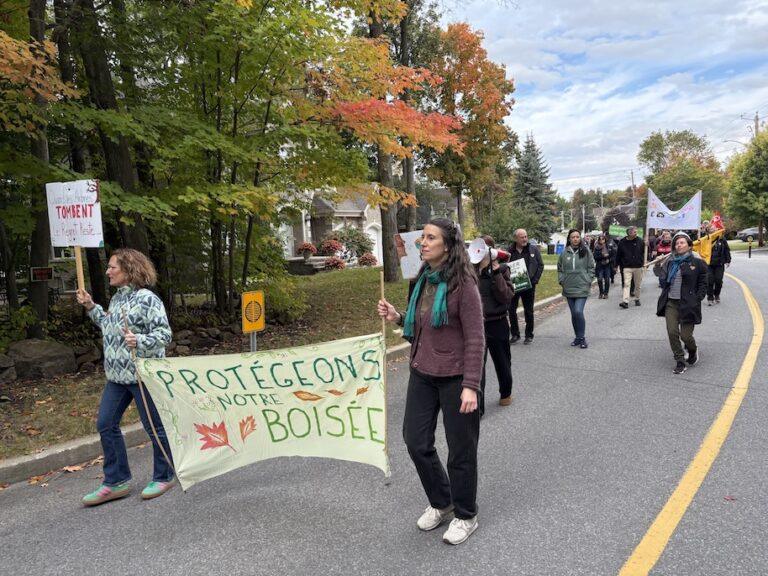
Hundreds of farmers and residents from rural communities across Quebec and eastern Ontario were in Rigaud last Saturday demanding the federal government halt its plans for the proposed Alto high-speed train from Quebec City to Toronto.

Liberals rebuke Picard for stand on sovereignty

Soulanges CAQ incumbent Marilyne Picard is being “dishonest” for failing to declare whether she is a federalist or a sovereignist, charged West Island Liberal candidate Monsef Derraji yesterday while in St. Lazare for a press conference.

How region voted in prior provincial elections

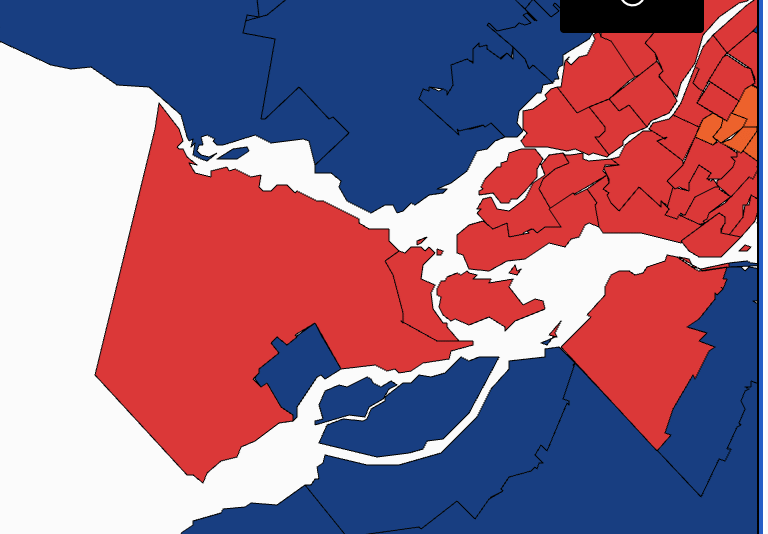
As voters prepare to go to the voting booth in the Oct. 5 election in what pollsters are predicting to be a tight race, The 1019 Report takes a look back at the results of the last provincial election in 2022 in the two ridings in the region.

The 1019 Report Brenda O’Farrell

Alto high-speed train plan needs serious review

Last Saturday, a few farmers in the northwestern corner of the Vaudreuil-Soulanges region invited a whole bunch of other farmers from across Quebec and eastern Ontario to join them in sending a message to the federal government: Don’t strip us of our farms to build a high-speed train line.

Threat prompts Hudson to change street signs

After deferring requests to add French to all its street signs — and delaying taking action for years — a threat from the Office québécois de la langue française that would result in provincial subsidies being withheld has finally prompted the Town of Hudson to adopt a formal plan to outline how it will conform to the province’s language laws.

Liberals commit to building Highway 20 bypass route

Amid Canada’s intensifying tariff war with the U.S., bond markets that are making mounting government debt more expensive to finance and the cost of living continuing to rise, leaders of all parties in the provincial election campaign are rolling out their election promises. In Vaudreuil-Soulanges, the Quebec Liberal party has made one major commitment — building the long-awaited Highway 20 bypass route through the Dorion section of Vaudreuil-Dorion.